Track Your Autoimmune Flares. Find What Triggers Them.
Autoimmune conditions like lupus, RA, Hashimoto's, MS, and Crohn's have unpredictable flare patterns. But they're not random. Flares are driven by stress, diet, sleep, weather, infections, and more—and these triggers are deeply personal. ReactLog correlates your flare severity with daily factors to reveal what actually sets you off. Bring months of data to your rheumatologist instead of vague memories.
You Know Your Flares Are Triggered—But You Can't Prove It
When you have an autoimmune condition, flares feel random. One month you're managing fine; the next month, out of nowhere, everything flares. You know something triggered it. Was it the stressful week at work? The sleep deprivation? The infection you had? The dietary change? The weather shift?
You can feel patterns in your own body. You notice that flares come after high-stress periods or bad sleep. You suspect certain foods make it worse. But when you sit across from your rheumatologist, you have nothing but vague memories. "I think stress makes it worse," you say, without concrete data to back it up. Your doctor adjusts treatment based on guesses instead of evidence.
The problem is that autoimmune flares are highly individual. What triggers lupus flares in one person won't trigger them in another. One person with RA flares from gluten; another doesn't react to gluten at all. Your doctor can't give you a general protocol—they need to understand YOUR triggers, based on YOUR body's patterns.
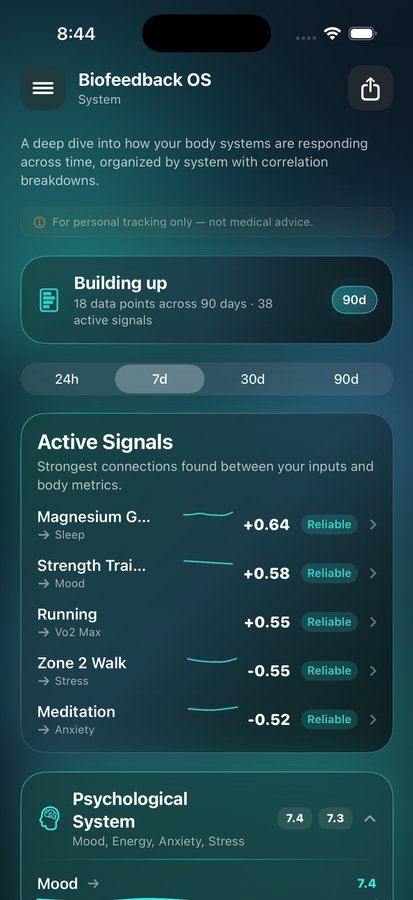
Data changes everything. Track your flare severity daily alongside daily factors: stress levels, sleep hours, food eaten, weather, infections, exercise, medications. After 2-3 weeks, patterns emerge. You see correlations: "My flares are 40% worse on weeks with sleep deprivation and high stress combined." You bring this evidence to your doctor and together you make better decisions about lifestyle, treatment, and management.
How It Works in 3 Steps
Transform flare confusion into clear trigger identification.
Rate Your Flare Severity
Each day, rate your flare severity: symptom intensity, joint pain, fatigue, inflammation, or whatever matters most to your condition. Use a simple slider from 0-10. It takes 10 seconds. Be honest about how you're feeling today.
Log Daily Factors
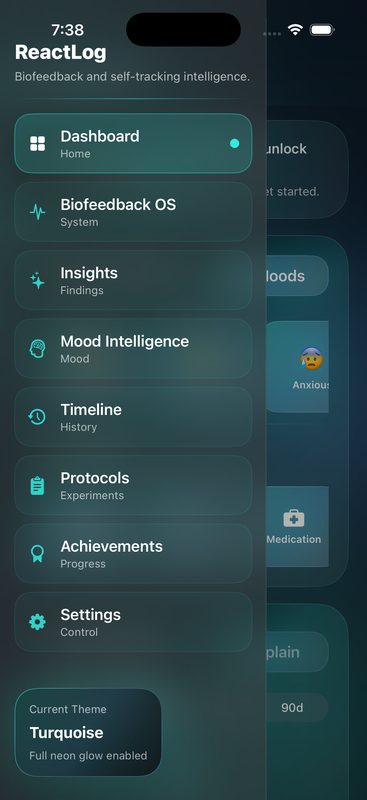
Log your daily inputs—stress, sleep, meals, weather, infections, exercise, medication—and check in with your mood and symptom severity multiple times a day. The more frequently you rate how you feel, the better ReactLog can distinguish between a slow-building flare and a rough afternoon. Quick entries take 10 seconds, even during a flare.
Discover Your Patterns
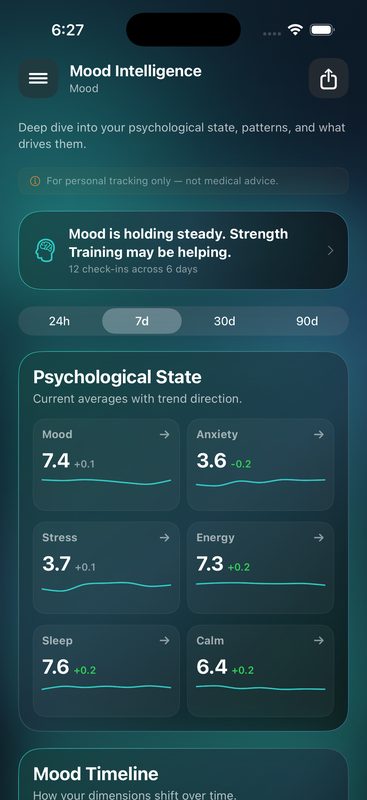
After 2-3 weeks of consistent logging, ReactLog's on-device analytics reveal correlations: "Your flare severity is 38% higher on weeks with inadequate sleep and stress combined." See which daily factors consistently align with your worst flares.
Track Everything That Affects Your Flares
Autoimmune triggers are individual. ReactLog lets you track what matters to you:
Flare Severity
Rate daily pain, inflammation, fatigue, and symptom intensity
Sleep & Rest
Sleep duration, quality, and impact on flare patterns
Stress & Mood
Daily stress levels, emotional state, anxiety, and mood changes
Food & Diet
Meals eaten, dietary patterns, and suspected food triggers
Exercise & Activity
Workout intensity, duration, and impact on flare severity
Weather & Environment
Temperature, humidity, barometric pressure, and seasonal patterns
Your Autoimmune Data Is Deeply Personal
Your flare patterns stay on your device, not someone else's server.
Your autoimmune health data reveals intimate details about your body and your life: diagnoses you're managing, medications you're taking, flare patterns that affect your work and relationships, dietary sensitivities, stress triggers. This is not data you want shared, sold, or stored on someone else's server.
Most health apps collect this data relentlessly. They sell it to insurance companies, data brokers, and advertisers. Your flare patterns could affect your insurance premiums. Your trigger data could be used against you. ReactLog takes a fundamentally different approach:
- No backend servers — Your flare data lives on your device only. Period.
- No data collection — We have nothing to collect. No servers means no data pipeline to sell or leak.
- No analytics tracking — We don't track how you use the app or what you log.
- No account required — No login, no email, no identification. You're completely anonymous.
- Face ID/Touch ID lock — Your autoimmune data is biometrically protected on your phone.
We charge for the app instead of selling your health data. This is a sustainable business model that aligns our interests with yours. We make money when you use ReactLog; we don't profit from your privacy. Your autoimmune data is yours alone.
Frequently Asked Questions
What is an autoimmune flare and how do I track it?
An autoimmune flare is a period when your immune system becomes overactive, causing a sudden increase in symptoms. This might include joint pain, fatigue, inflammation, skin rashes, or disease-specific symptoms. In ReactLog, you rate your flare severity each day on a scale from 0-10, and the app learns which daily factors—stress, sleep deprivation, diet changes, infections, or weather shifts—tend to trigger your flares. After 2-3 weeks of consistent tracking, patterns emerge showing your personal triggers.
Can ReactLog help me identify what triggers my autoimmune flares?
Yes. Autoimmune triggers are highly individual. One person with lupus may flare during high-stress weeks; another flares with sleep deprivation or after dietary changes. ReactLog tracks your flare severity alongside daily factors: stress levels, sleep quality, food intake, infections, weather, exercise, and more. After 2-3 weeks of consistent logging, the app's on-device analytics surface correlations, showing which combinations of factors correspond with your worst flares. You'll discover your unique trigger patterns.
Which autoimmune conditions does ReactLog support?
ReactLog is designed for any autoimmune condition where flares are unpredictable and trigger-driven. This includes lupus (SLE), rheumatoid arthritis (RA), Hashimoto's thyroiditis, Graves' disease, multiple sclerosis (MS), Crohn's disease, ulcerative colitis, celiac disease, psoriasis, Sjögren's syndrome, and many others. You customize which symptoms and daily factors matter most to your condition and your body.
Can I show my ReactLog data to my rheumatologist?
Absolutely. This is one of ReactLog's core purposes. Instead of telling your doctor "I think stress makes my flares worse" with no data to back it up, you can show months of tracked flare data correlated with specific factors. Doctors find this pattern data incredibly valuable for adjusting treatment, recommending lifestyle changes, and understanding your condition better. ReactLog is designed to be rheumatologist-friendly for these conversations.
Is my autoimmune data private and secure?
Yes. ReactLog has no backend servers and zero data collection. Your flare logs, symptom entries, daily factor ratings, and all patterns detected never leave your iPhone. We use on-device processing only. You can lock the app with Face ID or Touch ID for additional security. Autoimmune data is deeply personal—medications, diagnoses, flare patterns—and ReactLog ensures it stays only on your device.
Start tracking today.
Stop guessing about your autoimmune triggers. Get data. Bring it to your doctor. Make better decisions.