Find Your Migraine Triggers With Data, Not Guesswork.
Migraines have complex triggers: food, sleep, stress, weather, hormones, screen time, dehydration. You suspect patterns, but can't prove them. ReactLog logs every migraine attack alongside your daily factors, then surfaces the correlations causing your migraines—so you can bring evidence to your neurologist.
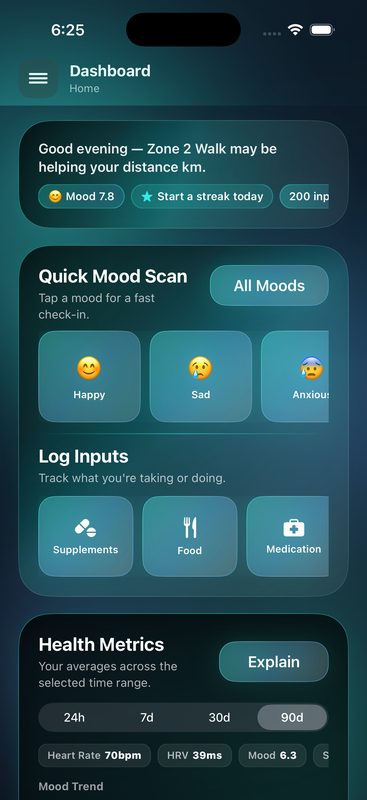
Your Migraines Seem Random. They're Not.
You get migraines—sometimes triggered by stress, sometimes by food, sometimes by nothing you can identify. You avoid caffeine. You try magnesium supplements. You don't go out in bright sunlight. But the migraines keep coming, and you still don't know why.
The problem is multi-factor triggers. A migraine isn't caused by one thing—it's the combination: mild dehydration + skipped breakfast + three cups of coffee + a stressful work meeting + hormonal changes. Remove any one factor and the migraine might not happen. But without tracking, you can't see these patterns.
You end up making decisions based on incomplete information. You cut out foods that might not be your triggers while missing the real ones. You take preventative medications that might not address your actual risk factors. You feel helpless because you can't predict or control when the next attack will hit.
The solution is evidence. Track your migraines alongside daily factors for 2-3 weeks. After enough data, ReactLog reveals which patterns precede your attacks. You discover that you get migraines when you sleep less than 7 hours AND skip lunch AND have high stress—but not if all three factors are present separately. You bring this data to your neurologist and make targeted treatment decisions, not guesses.
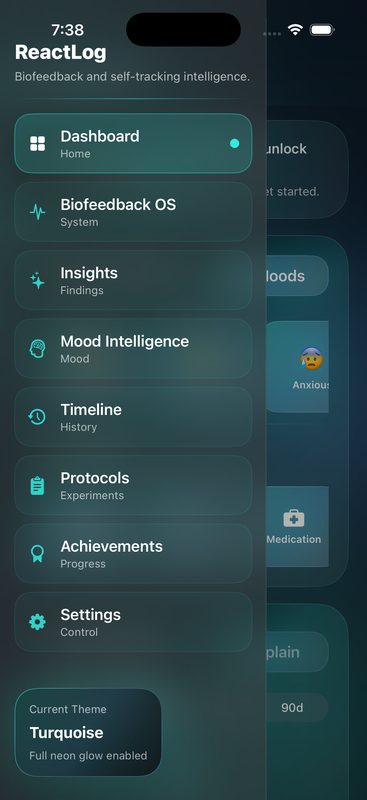
How It Works in 3 Steps
Transform migraine guessing into evidence-based prevention.
Log Your Migraines
When a migraine hits, record it immediately: onset time, severity (1-10 scale), duration, associated symptoms (nausea, light sensitivity, aura), and any emergency medication you take. ReactLog timestamped logging ensures accuracy—no relying on memory later.
Track Daily Factors
Log your daily inputs—meals, caffeine, sleep, stress, weather, hormonal cycle, screen time, hydration—and check in with your mood and head pain multiple times a day, not just when a migraine hits. Frequent logging between attacks gives ReactLog the baseline data it needs to spot what's building up. Quick sliders make each check-in take 10 seconds.
Discover Your Patterns
After 2-3 weeks of consistent data, ReactLog's on-device analytics surface correlations: "Migraines are 68% more likely when you get less than 7 hours sleep AND skip breakfast." You see which combinations of factors precede your attacks, so you can prevent them.
Track Everything Related to Your Migraines
ReactLog adapts to your unique migraine profile. Track any combination of these:
Migraine Attacks
Onset time, severity, duration, symptoms (nausea, aura, photophobia), and medications taken
Food & Caffeine
Meals eaten, trigger foods (aged cheese, alcohol, nitrates), coffee, and caffeinated beverages
Sleep Quality
Sleep duration, quality rating, wake-ups, bedtime, and morning grogginess
Stress & Mood
Daily stress level (1-10), mood, anxiety level, major life events, and emotional state
Weather & Environment
Temperature, humidity, barometric pressure changes, air quality, and seasonal triggers
Screen Time
Hours of screen exposure, blue light exposure, and device usage patterns
Hormonal Cycle
Menstrual cycle phase, hormonal changes, and cycle-related migraine patterns
Physical Activity
Exercise type, duration, intensity, and whether overexertion preceded migraines
Your Migraine Data Stays on Your Phone
Why privacy matters for sensitive health tracking.
Your migraine history is deeply personal: your health conditions, neurological status, medication use, hormonal patterns, stress levels. This data can be used against you by insurance companies, employers, or anyone with access.
Most health apps sell your migraine data to third parties. It gets aggregated, re-sold, and used in ways you never authorized. ReactLog is fundamentally different:
- No backend servers — Your migraine logs live on your device only. Zero cloud storage.
- No data collection — We have no backend to collect data to. Your data stays private by design.
- No analytics tracking — We don't monitor your usage patterns, migraine frequency, or app behavior.
- No account required — You don't need to sign up, log in, or provide any identifying information.
- Face ID/Touch ID lock — Your migraine data is biometrically protected on your phone.
We charge for the app instead of charging you with your privacy. Our business model requires your continued use—not your data. We want you to track your migraines confidently, knowing your information never leaves your device.
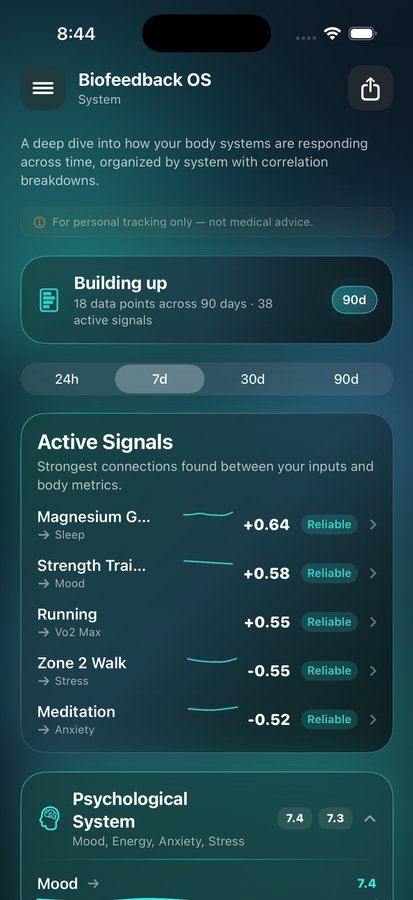
Frequently Asked Questions
How do I identify my migraine triggers?
Track consistently for 2-3 weeks. Log each migraine attack with severity, duration, time of day, and associated symptoms. Simultaneously track daily factors: food intake, sleep duration, stress levels, weather, hormones, and screen time. After enough data, ReactLog detects correlations and shows you which patterns precede your migraines. For example: "Migraines are 68% more likely when you sleep less than 7 hours AND skip breakfast."
What factors can I track to identify triggers?
Common migraine triggers include food (caffeine, alcohol, aged cheeses, processed meats with nitrates), sleep changes (too little or too much sleep), stress and emotional shifts, weather changes and barometric pressure, hormonal fluctuations during menstrual cycle, screen time and eye strain, physical overexertion, dehydration, skipped meals, and specific medications. ReactLog supports all of these plus unlimited custom factors unique to your migraines.
How long until I discover my migraine triggers?
Most users identify clear patterns after 2-3 weeks of consistent tracking. Some discover major triggers in as little as 10-14 days, while others with complex multi-factor migraines need 4-6 weeks. Consistency matters more than duration—tracking every day, even days without migraines, builds better data than sporadic entries. The more complete your daily logs, the more accurate the patterns.
Is my migraine data private?
Yes, absolutely. ReactLog has no backend servers and zero data collection. Your migraine logs, symptom entries, daily factor tracking, and all personal health information never leaves your iPhone. Everything processes on-device using your phone's local storage. You can lock the app with Face ID or Touch ID for an additional security layer. Your sensitive health data is completely private and under your control.
Can I share my migraine data with my doctor?
Yes. Your data stays on your device, but you can manually share key findings and patterns with your neurologist or doctor. The correlations you discover in ReactLog provide concrete evidence to inform treatment decisions—whether preventative medication, trigger avoidance strategies, or lifestyle changes. Bring your data to your appointments and have informed, evidence-based conversations about your migraine management instead of guessing about triggers.
Start tracking today.
Find your migraine triggers with real data. Start your 14-day free trial. No account required. Your data stays on your phone.