Keep a Symptom Journal That Actually Reveals Patterns
You experience the same symptoms repeatedly but have no idea what's causing them. Is it something you ate? Poor sleep? Stress? The weather? Without data, you're just guessing. ReactLog correlates your daily symptoms with food, sleep, stress, weather, activities, and lifestyle factors—revealing the hidden patterns your doctor needs to see. Bring evidence to your medical appointments, not just descriptions.
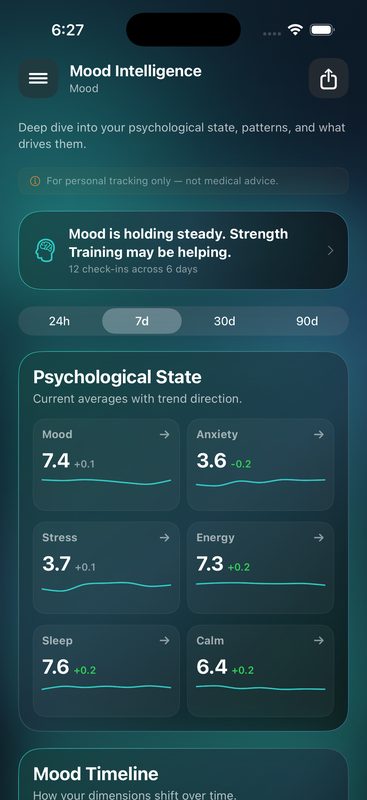
You're Living With Symptoms You Could Control If You Understood Their Triggers
Chronic symptoms are like a mystery with clues scattered everywhere. You wake up with a headache. Was it the wine last night? Did you sleep poorly? Too much stress? You can't tell. So you go to your doctor and say, "I've been having headaches," and they ask, "How often? What's the pattern? What else is happening when you get them?" And you don't know. You're flying blind.
The problem is that symptom patterns are invisible without data. Your brain doesn't remember the details. You might notice a headache on Tuesday and forget that you also had one on Thursday. You might not connect that your brain fog always appears after you eat bread, or that your anxiety spikes on nights when you don't sleep well. These correlations are real, but they're hidden in the noise of daily life.
Without tracking, you waste months or years trying random interventions. You eliminate foods randomly. You change your sleep schedule without knowing if it helps. You try supplements and never confirm whether they actually make a difference. Meanwhile, your doctor can't help you because you don't have the evidence they need.
The solution is a detailed symptom journal combined with intelligent pattern detection. Track your symptoms daily alongside the factors that might trigger them. After 3-4 weeks, ReactLog's on-device analytics surface correlations: "Your migraines decrease 67% on days you sleep 8+ hours and avoid dairy." Now you have evidence. You can bring this to your doctor. You can make informed decisions about your health instead of guessing.
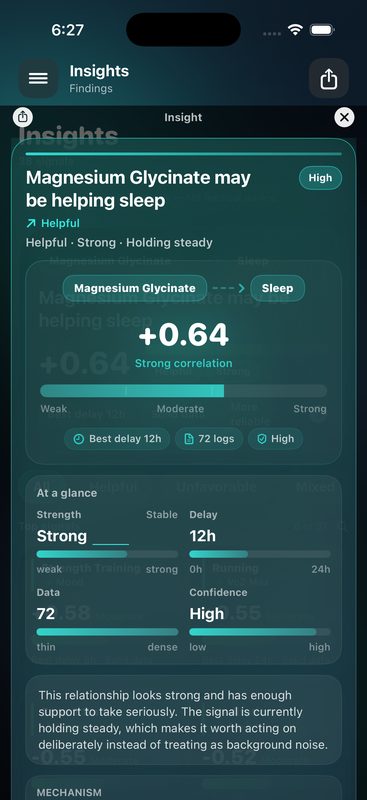
How It Works in 3 Steps
Transform confusing symptoms into clear, actionable patterns.
Log Your Symptoms Daily
Rate your symptoms and mood multiple times throughout the day—not just once. Morning energy, afternoon brain fog, evening pain levels. Each check-in takes 30 seconds on simple sliders. The more frequently you log how you feel, the more precisely ReactLog can connect your symptoms to their causes.
Track Your Lifestyle Factors
Log your daily inputs—what you ate, sleep duration, stress, exercise, weather, cycle phase, medications. These inputs are one half of the equation; your frequent symptom and mood check-ins are the other. ReactLog correlates both to reveal what's driving your symptoms. More inputs plus more frequent mood logs means sharper insights.
Discover Your Triggers
After 3-4 weeks of consistent logging, ReactLog's on-device analytics reveal correlations: "Your migraines are 5x more likely after you eat gluten" or "Your anxiety improves 40% on days you exercise and get 8+ hours of sleep." You see the patterns clearly. You can bring these findings to your doctor as concrete evidence.
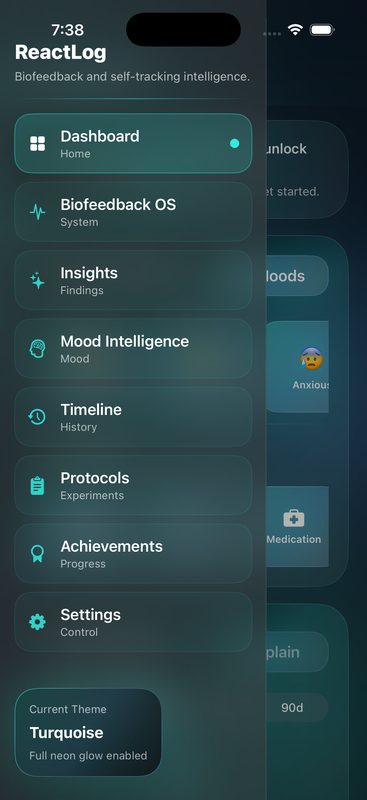
Track Everything That Matters for Your Health
ReactLog adapts to your unique symptoms and health goals. Track any combination of these:
Daily Symptoms
Headaches, migraines, pain, brain fog, fatigue, and custom symptom tracking
Food & Diet
Meals, ingredients, dietary patterns, and potential food triggers
Sleep Quality
Sleep duration, quality, wake-ups, and how rested you feel
Stress & Mood
Daily stress level, emotional state, anxiety, and overall mood rating
Activity & Exercise
Workout type, duration, intensity, and daily physical activity
Weather & Environment
Weather patterns, humidity, barometric pressure, and seasonal factors
Menstrual Cycle
Cycle phase, menstrual symptoms, and hormonal patterns
Custom Tracking
Create unlimited custom metrics specific to your symptoms and health
Your Symptom Data Never Leaves Your iPhone
Why complete privacy is essential for symptom tracking.
A symptom journal is deeply intimate. It contains information about chronic health conditions, mental health challenges, dietary restrictions, bodily functions, and vulnerabilities that you'd never want to share publicly. This data is extremely valuable to advertisers, insurance companies, and data brokers—which is why most health apps exist to harvest and sell it.
ReactLog is fundamentally different. We built it privacy-first, which means we can't access your symptom data even if we wanted to:
- No backend servers — Your symptom journal lives entirely on your device. Period.
- Zero data collection — We have nothing to collect. No servers means no data pipeline.
- No analytics tracking — We don't know what you're tracking or when you use the app.
- No account required — You don't need a username, email, or any identifier to use ReactLog.
- Face ID/Touch ID lock — Your symptom journal is biometrically protected on your device.
We charge for the app instead of charging you with your privacy. This aligns our business model with your interests. We want you to use ReactLog, track your symptoms, find patterns, and improve your health—but we never want access to that data.
Frequently Asked Questions
How does a symptom journal help me understand my health?
A symptom journal helps you identify patterns and triggers that would be invisible otherwise. By logging your symptoms daily alongside food, sleep, stress, and activities, you discover which factors correlate with symptom improvements or flare-ups. After 3-4 weeks, patterns emerge that you can share with your doctor as concrete evidence instead of vague descriptions.
What symptoms can I track?
Any symptom. Headaches, migraines, chronic pain, brain fog, fatigue, anxiety, panic attacks, digestive issues, acid reflux, bloating, skin reactions, joint pain, inflammation, insomnia, heart palpitations, hormonal symptoms, and unlimited custom entries. If you experience it, you can track it in ReactLog.
How long should I keep a symptom journal?
Most people start seeing clear patterns after 3-4 weeks of consistent daily logging. However, longer-term journaling (8-12 weeks or more) reveals seasonal patterns, hormonal cycles, and less obvious correlations. Consistency matters more than duration—daily tracking gives you better data than sporadic entries even over longer periods.
Can I use this journal to bring evidence to my doctor?
Yes, absolutely. One of ReactLog's core strengths is helping you gather evidence to bring to medical appointments. Your symptom logs, correlation data, and tracked patterns are exactly what doctors need to make informed diagnoses and treatment decisions. ReactLog can generate reports summarizing your data and key findings to share with healthcare providers.
Is my symptom data completely private?
Yes. ReactLog has no backend servers and zero data collection. Your symptom journal, daily entries, and all tracked data never leave your iPhone. We use on-device processing only. You can lock the app with Face ID or Touch ID for an additional security layer. Your sensitive health information is yours alone and accessible to you only.
Start tracking today.
Start your 14-day free trial. 100% on-device. Your symptom data stays on your phone.